
The human consequences of box-ticking
We all want a chance at a decent quality of life.
This week, the Government cut the health element of Universal Credit for most new claimants, which will push some of the most severely ill and Disabled people in the country into, or deeper into, poverty.
That’s the warehouse worker who damages his back. The care assistant who develops Stage 3 cancer. The teacher whose multiple sclerosis relapses. And the mechanic diagnosed with bipolar disorder.
In real terms, the cut will mean an average loss for most new claims, compared with the previous system, of over £2,500 a year – the equivalent of enough to eat and a warm home.
Why the work capability assessment matters
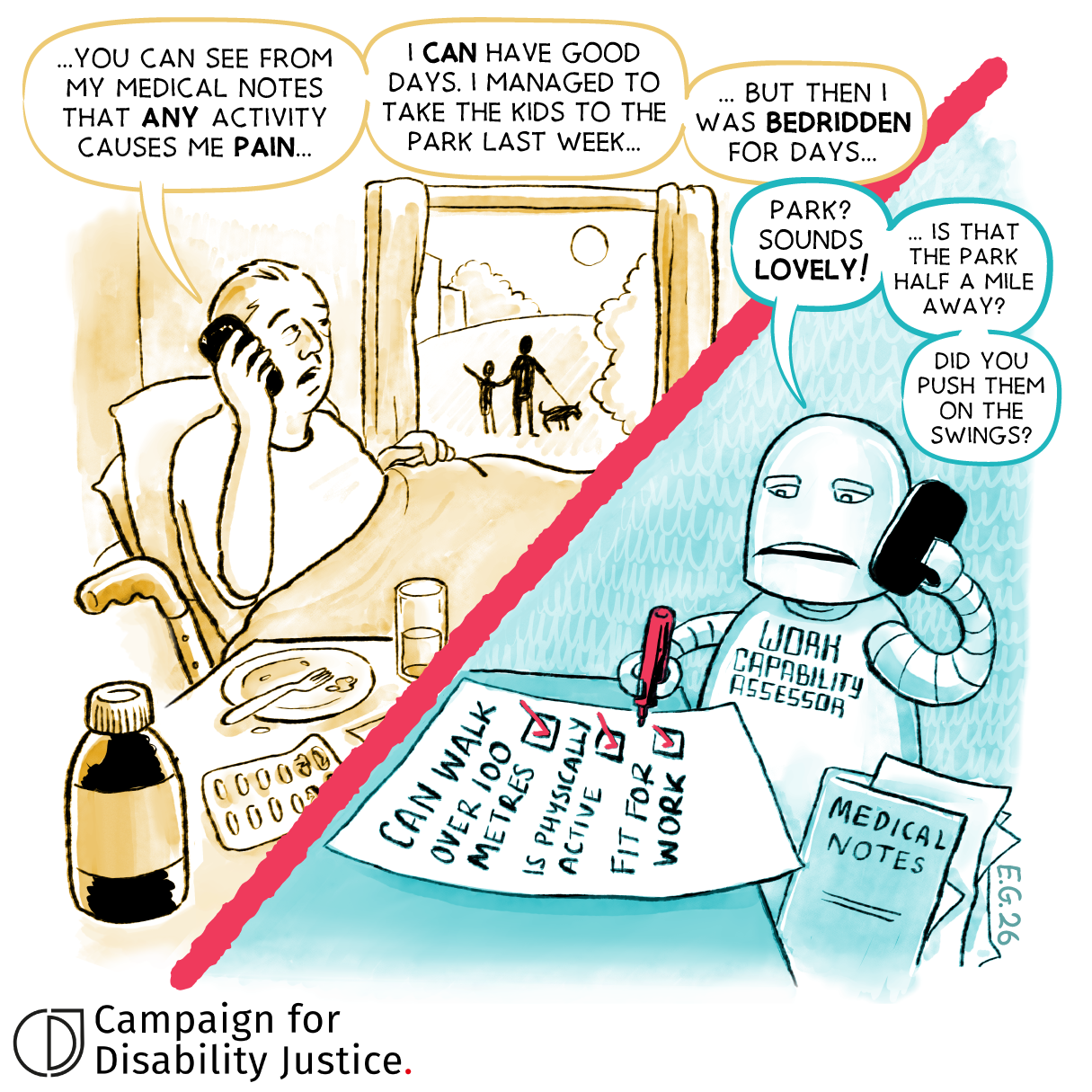
The work capability assessment is what decides if someone can or can’t work or prepare for work, and there’s extensive evidence that it’s deeply, deeply flawed.
People who’ve been through the assessment told us that their medical information was often missed or not properly reflected, and some only got the right decision after appealing.
“They didn't even bother asking me about the worst part of my conditions even though I'd detailed it – just ticked 'no problem'.”
“I appealed, and the decision was overturned. I’ve had to appeal four times. All of the decisions were overturned.”
The Government is planning eventually to abolish the work capability assessment but there’s currently no fixed timetable for this or any clarity on what might replace it.
Ludicrous and cruel
It’s ludicrous – and cruel – that the Government would cut the vital safety net of the health element of Universal Credit, even if the work capability assessment wasn’t so badly flawed. It’s hard enough for so many people already. This cut will mean hundreds of thousands of people will face dire financial hardship.
This is not the country we want to be. We can and must do better.
If you use social media, we’d love it if you would share this cartoon to help shine a spotlight on this issue. Here are the links:
What the changes might mean for you
For information on the April changes to Universal Credit, see Check how Universal Credit has changed in 2026 - Citizens Advice
For information on who should still get the higher rate of the health element, see Getting Universal Credit if you’re sick or disabled - Citizens Advice
Do you like this page?